← Return
METEODYN will be at WindEurope Madrid : Two posters to discover
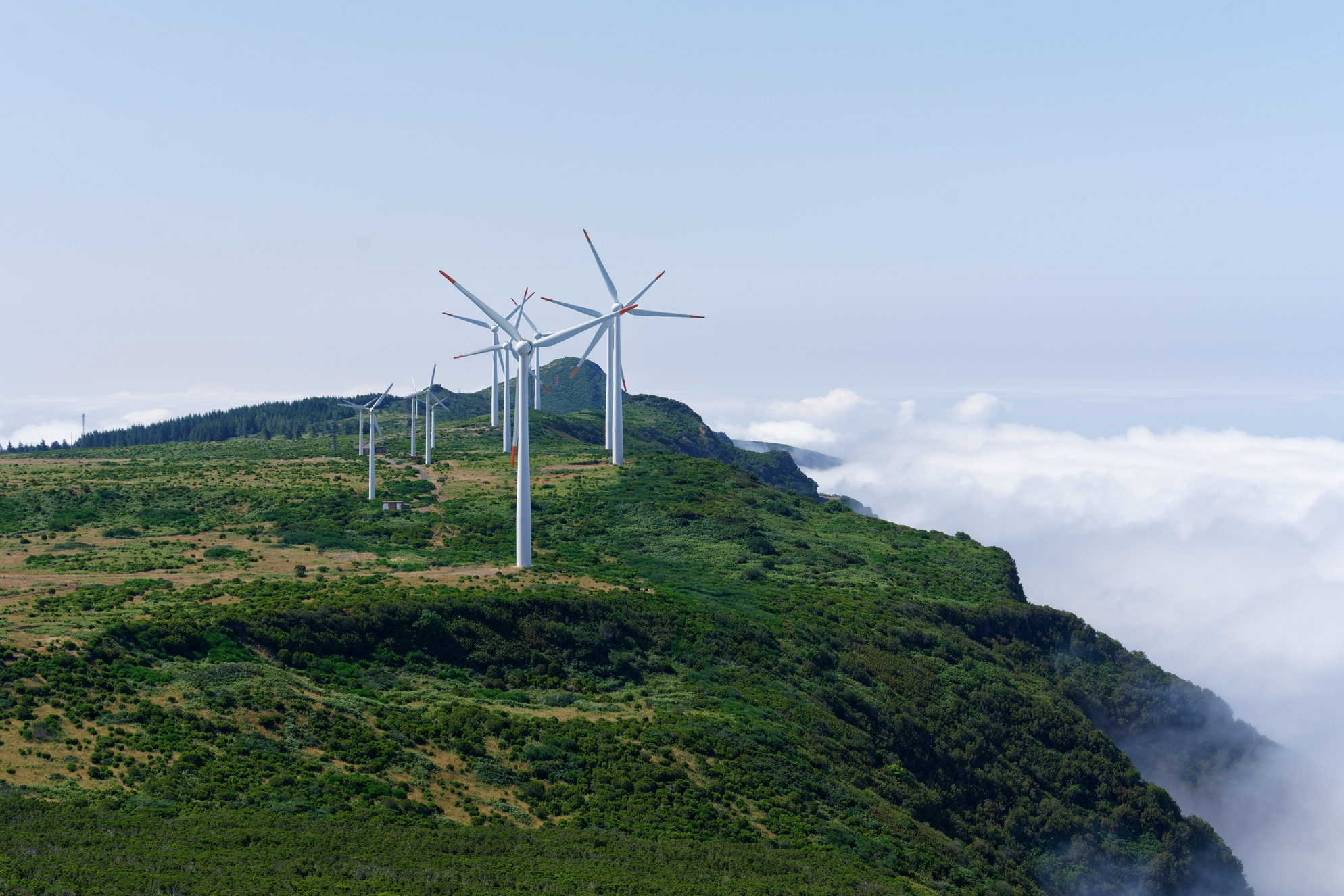
METEODYN will be attending WindEurope Annual Event 2026 in Madrid, where we will present a technical poster in collaboration with CVA Group, alongside a second collaborative contribution with Goldwind.
Le WindEurope Annual Event 2026 se tiendra du 21 au 23 avril à l’IFEMA de Madrid, en Espagne.
WindEurope 2026 will be a valuable opportunity to share recent work addressing two key challenges in the wind industry: improving early-stage energy production assessment and better understanding large-scale wake effects. Through these contributions, METEODYN highlights advanced modeling approaches for wind resource assessment and supports collaborative research shared with partners from across the sector.
Deux poster presentations
In collaboration with CVA Group
“Estimated Annual Energy Production with the NWP-CFD Downscaling Method: An Analysis of 4 Italian Wind Farm”
Edouard Leonard (METEODYN), Maurice Grimod (CVA Group), Ru Li (METEODYN), Antoine Rozel (METEODYN), Filippo Norat (CVA Group), et Eric Tromeur (METEODYN).
One of the most effective strategies for pre-feasibility projects in the wind industry is the numerical weather prediction (NWP) method. Using wind mesoscale numerical weather prediction, early wind resource assessment studies can be finished quickly and at a minimal cost without the need for long measurement campaigns.
However, the NWP method has the limitation that it does not consider accurately the influence of local orography and forests on wind flow leading to significant errors in complex and forested terrains. Recently, many studies have highlighted the potential of combining NWP method with Computational fluid dynamics approach (CFD). The NWP-CFD approach uses the NWP wind speed data as a meteorological data input condition for computational fluid dynamics (CFD), which takes topographic features and surface roughness into account.
The objective of this work was to investigate if wind turbine production could be estimated for pre-feasibility wind studies using NWP-CFD approach in a short amount of time with acceptable errors. For this, we performed a large study in Italy over 4 different wind farms and more than 40 wind turbines.
This work’s primary contribution is a detailed methodology following specific conditions for production assessment based on NWP-CFD. The second contribution is the global method uncertainty for the NEWA-based NWP-CFD using more than 40 validation cases in 4 Italian wind farms. We will show that combining CFD and WRF approaches can reduce the WRF simulation errors by 30-50% depending on the wind turbine. In this work absolute errors on wind farm production estimates vary from 7% to 16% that are still quite accurate for early studies without mast data. The advantages and disadvantages of this approach for wind resource assessment will also be discussed.
CVA is a key energy group in Europe, operating eight wind farms in Italy and producing on average around 320,000 MWh of wind power, with a strong interest in accurate early wind resource assessment (WRA) studies.
📍 Poster presented by Edouard Leonard (METEODYN).
In collaboration with Goldwind
“Observation and simulation of large-scale onshore wind farm clusters’ wake propagation: a case study in Guazhou, China”
Pengfei Zhang (Goldwind), GaoShuo Hu (Goldwind), Dong Hang (Goldwind), Yapeng Duan (Meteodyn China), and Fu Bin (Meteodyn China).
This study investigates the potential wake effects of a large-scale wind power base on a meteorological mast located 30 km away. The wind power base, spanning 138 km × 43 km and comprising 4,800 turbines from 35 wind farms, has been operational for years. To quantify and characterize the wake impact at such a scale, we employed the Wind Farm Parameterization (WFP) within the Weather Research and Forecasting (WRF) model. Two high-resolution mesoscale simulations were conducted: one accounting for the wind farm’s wake effects and one without.
Comparative analysis of the results demonstrates a measurable wind speed reduction at the mast location, confirming that large-scale wind farms can significantly influence wind resources tens of kilometers downstream. This work demonstrates the practical necessity of integrating wind farm-atmosphere interactions into mesoscale modeling for improved wind resource assessment and energy yield forecasting.
📍 Poster presented by Pengfei Zhang (Goldwind).
Beyond METEODYN’s presence at WindEurope 2026, the event will also highlight the broader presence of the Groupe CLS in Madrid. Visitors will be able to meet CLS at Business France, stand 9-C120d, as well as Quiet-Oceans at stand 9-C120j. A great opportunity to explore complementary expertise and perspectives across the group.
Experts on site
METEODYN

Edouard Leonard
Technical Product Manager, Senior Wind Expert, PhD, METEODYN

Guillaume Vervout
Business Manager, METEODYN
CLS Group
Mauricio Da Rocha Fragoso — Director of Energies and Infrastructure Monitoring, CLS Group
Sidney Bilski — Head of Sales, Marketing & QHSE, CLS Group
Richard Liptrot — Metocean Business Development Manager, CLS Group
Quiet-Oceans
Maud Dumas — Sales & Marketing Director, Quiet-Oceans
Gwendoline Bianeis — International Sales, Quiet-Oceans