
Wind modeling
Our cutting-edge technologies, such as Computational Fluid Dynamics (CFD) and meso-micro-scale coupling, provide a sophisticated numerical approach to simulating wind behavior at multiple scales, enabling detailed analysis of complex airflows.
Accurate computation of wind characteristics
Our numerical approach allows us to model the complex behavior of the wind in detail, enabling us to accurately compute its characteristics. The local topography, with its elevations and contours, has a significant influence on air flows. Our numerical models fully incorporate this data and also account for the presence of obstacles such as vegetation, buildings, or complex structures.
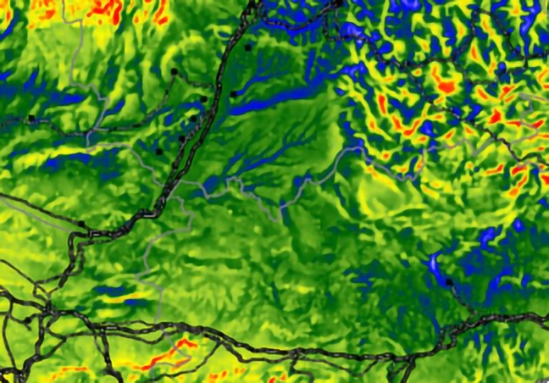
Onshore and Offshore Wind Atlases
Identify the best onshore and offshore wind resources with our regional or national wind atlases.
Whether you are a wind farm developer or a local authority, creating a wind atlas provides accurate mapping of wind characteristics such as average wind speed (m/s).
The Wind Atlas is an essential decision support tool to effectively identify wind resources in a region, determine the optimal siting of wind farms, calculate their energy density (W/m²), and convince communities of the choices made.
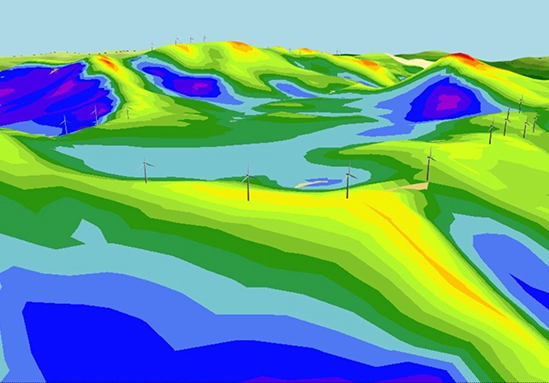
Onshore and Offshore Wind Energy Potential Analysis
We accurately compute the wind resource at your wind farm site, whether it's onshore, offshore or in an urban environment. We perform a comprehensive assessment of the wind characteristics at the site using advanced technologies such as CFD modeling and meso-micro-scale coupling.
Our ability to model wind extends to all terrain types, even the most complex, including forested areas or mountainous landscapes. By integrating these advanced technologies, we are able to provide an accurate assessment of the Annual Energy Production (AEP) in accordance with IEC 61400 standards.
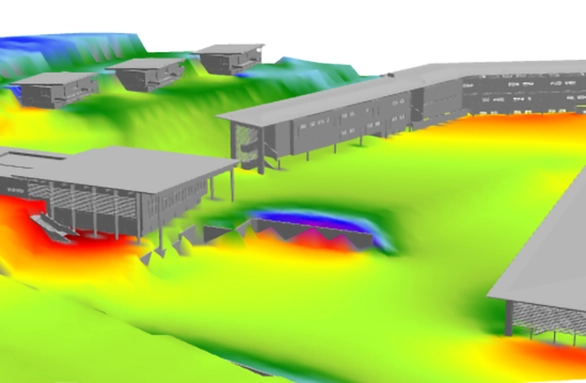
Comfortable cities and buildings
It is essential to consider the climatic dimension for comfortable indoor and outdoor spaces for users.
Outdoors, the wind can create uncomfortable windy corridors for pedestrians. Indoors, wind serves bioclimatic designs through natural ventilation, reducing energy consumption of habitats and improving their comfort.
Accurate wind modeling allows to identify sources of discomfort, address them, and optimize spaces and constructions.
News
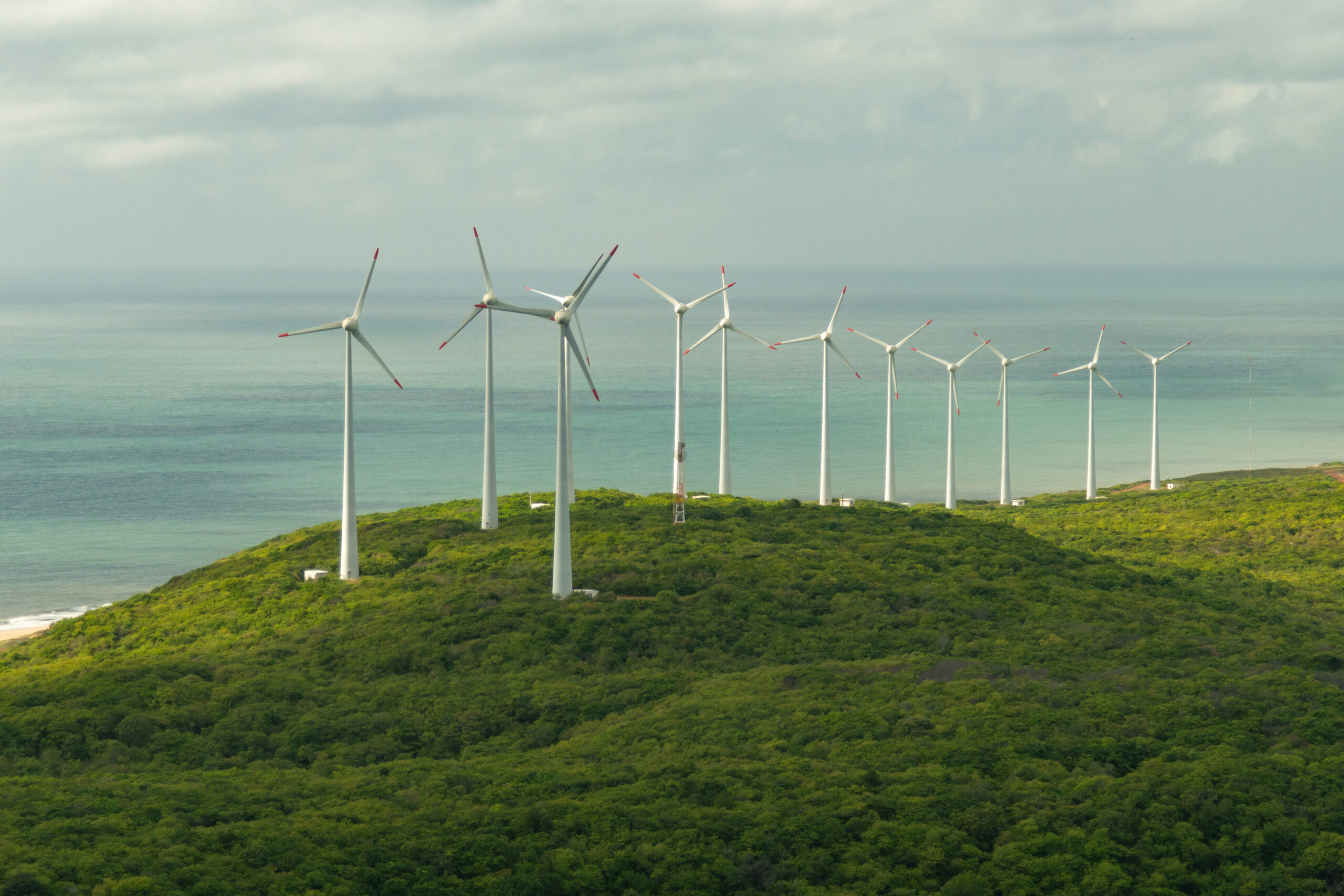
METEODYN at Brazil Windpower 2026: Addressing Wind Development in a Challenging Market
From October 27 to 29, 2026, METEODYN will attend the 17th edition of Brazil Windpower at São Paulo Expo, Brazil. This year's event will address several challenges facing Brazil's wind energy sector, including offshore wind development, generation curtailment and...
METEODYN at Green Power Sweden Summit 2026
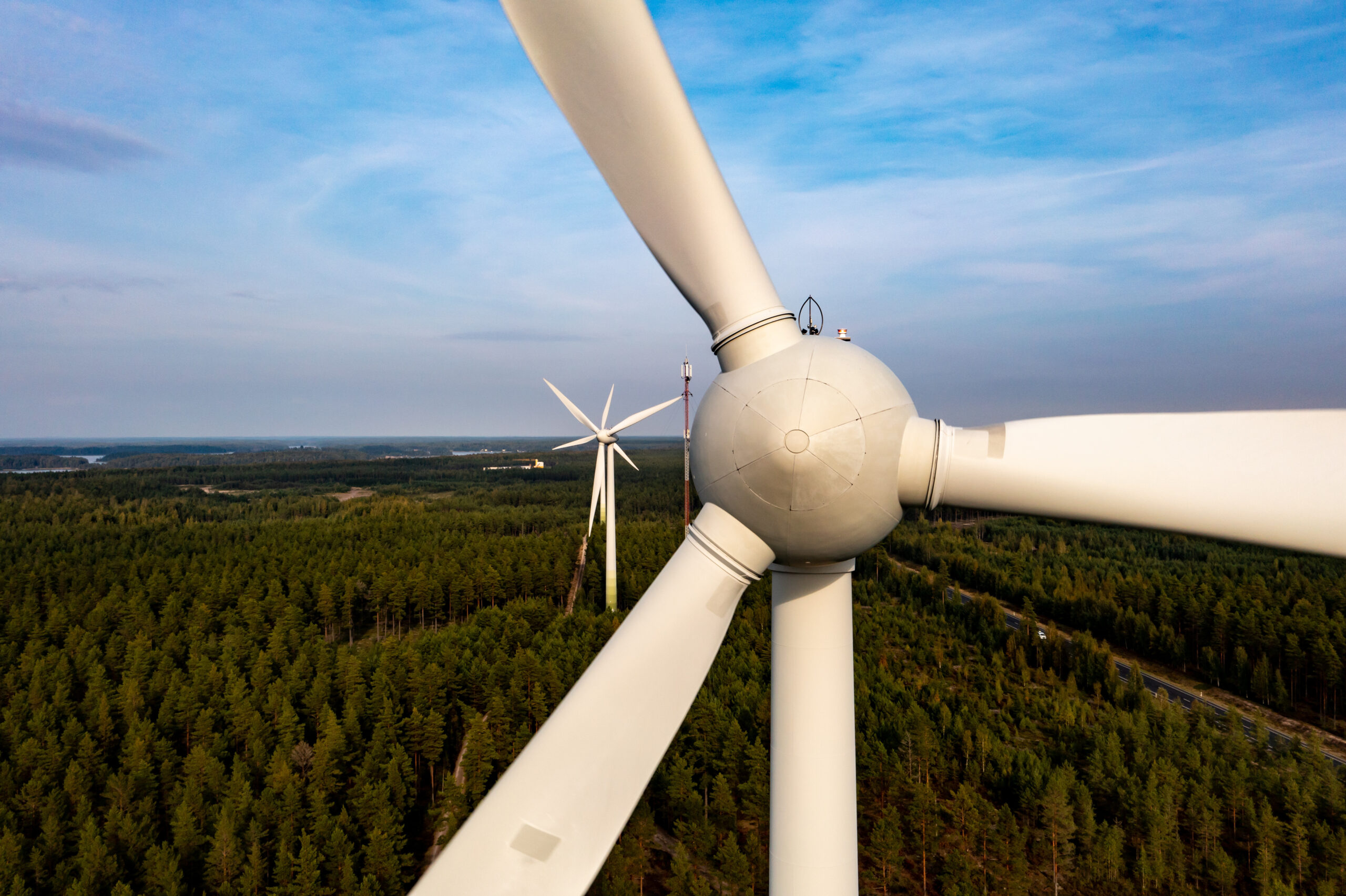
On October 6–7, 2026, METEODYN will attend Green Power Sweden Summit 2026 at the Stockholm Waterfront Congress Centre. Sweden offers strong potential for wind energy development, but also presents specific challenges for wind resource assessment. With large forested...
WindEnergy Hamburg 2026: From wind assessment to operational performance
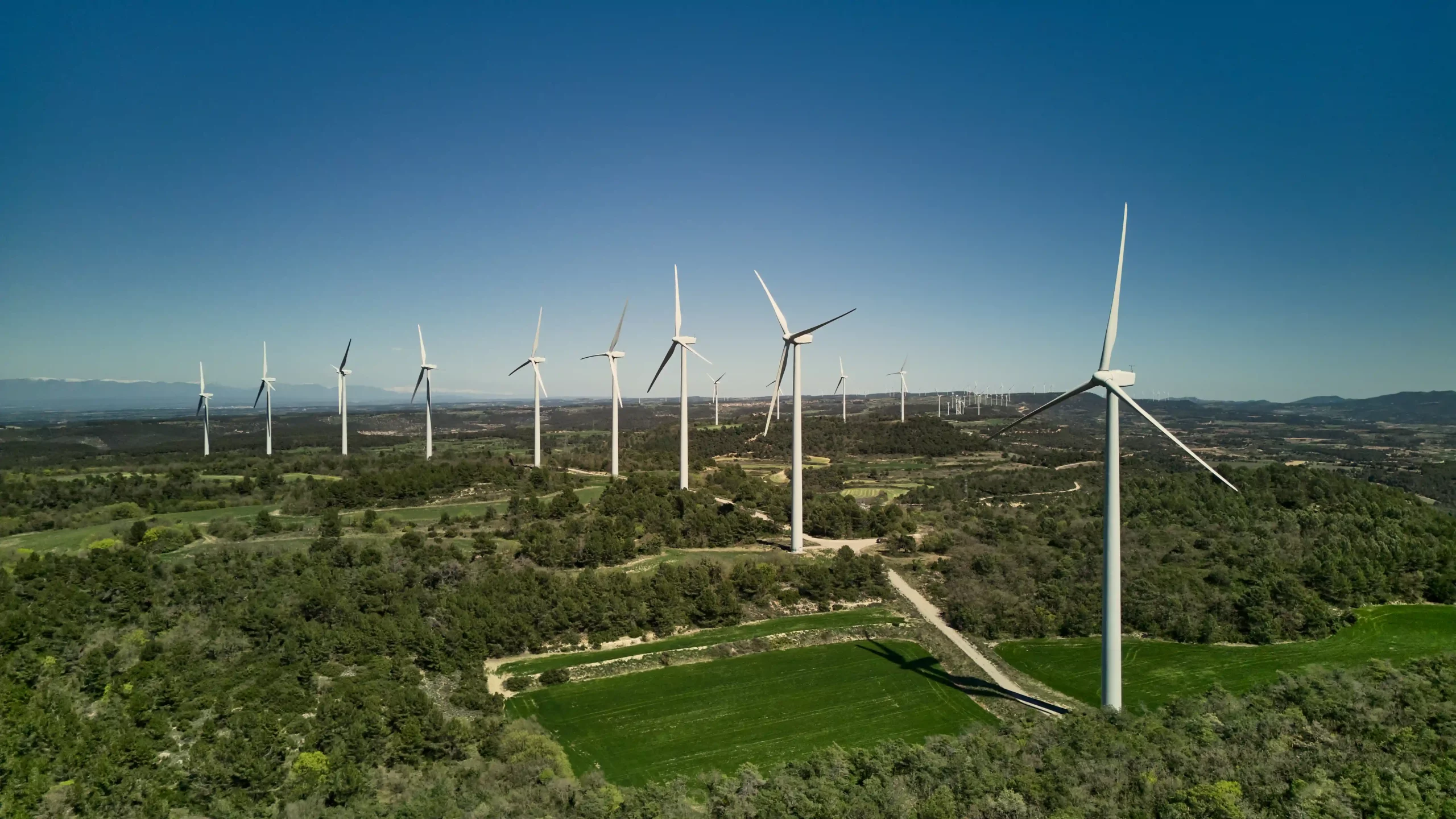
How can better decisions be made throughout a wind project, from site assessment to operational performance? From September 22 to 25, 2026, METEODYN will be exhibiting at WindEnergy Hamburg, one of the major international events for the onshore and offshore wind...